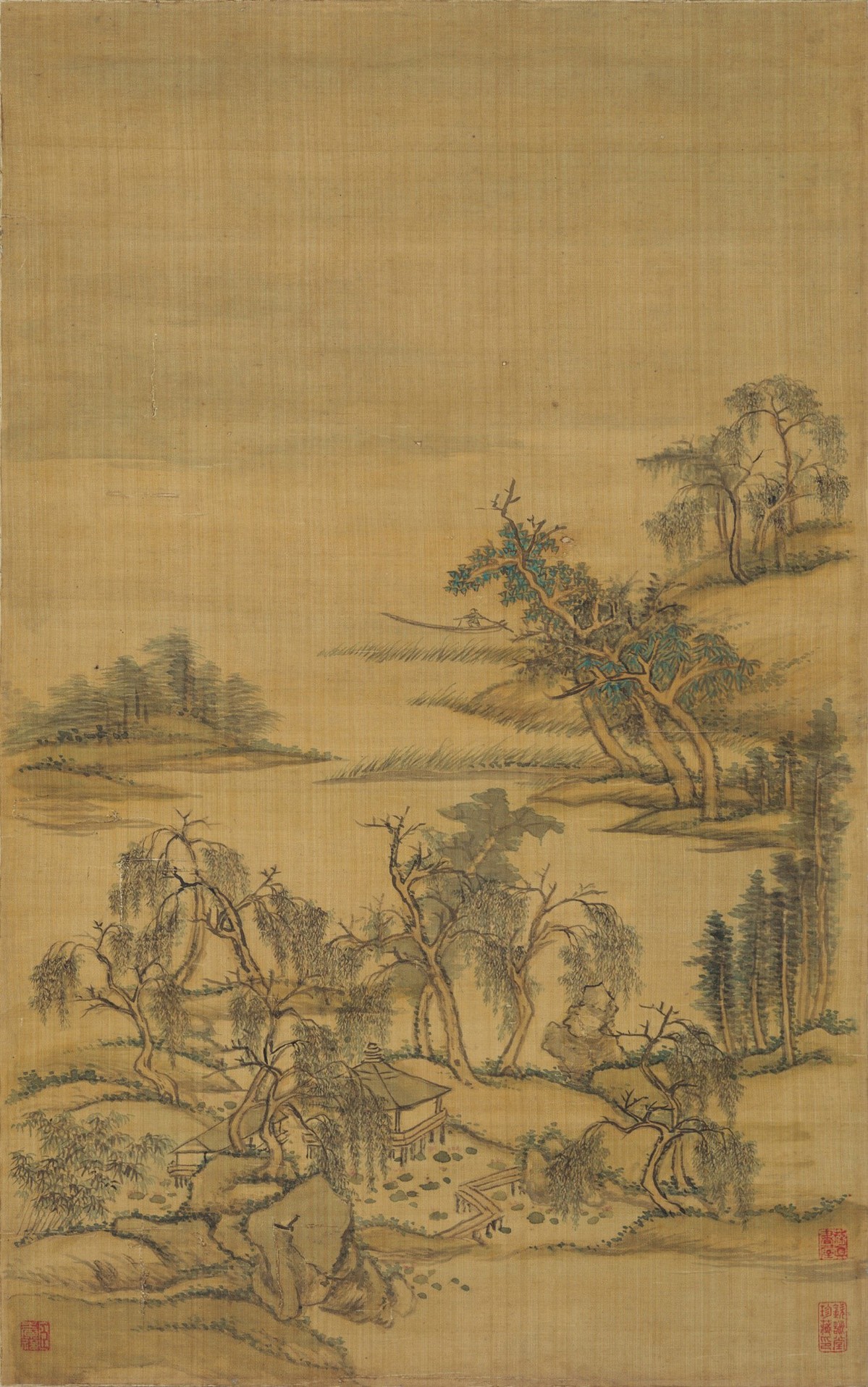
Wang Yuanqi
Introduction
Wang Yuanqi (1642-1715) was a prominent Chinese painter and one of the "four master landscape painters" of the early Qing Dynasty. Along with his grandfather, Wang Shimin, he was part of the "Four Wangs," a group of influential landscape painters. Wang Yuanqi is celebrated for his significant contributions to the art of landscape painting, which earned him a favored position in the imperial court of Emperor Kangxi. His approach to art emphasized simplicity and intellectual grace, which resonated with the aesthetic preferences of his era. Wang Yuanqi's legacy continues to be appreciated in the world of Chinese art, particularly for his unique style and the continuation of traditional painting techniques.
Early Life
Wang Yuanqi was born into a family with a rich artistic heritage. His grandfather, Wang Shimin, was one of the preeminent landscape painters of the early Qing Dynasty, which greatly influenced Wang Yuanqi's development as an artist. Growing up in Taicang, Jiangsu province, Wang Yuanqi was nurtured in an environment that valued artistic expression and cultural refinement. This familial context played a crucial role in shaping his artistic vision and technique.
From an early age, Wang Yuanqi was exposed to the works of past masters and was encouraged to study their techniques. This early education laid the foundation for his future achievements in landscape painting. His dedication to learning from celebrated artists such as Dong Qichang and Huang Gongwang is evident in his works, which often incorporate elements inspired by these masters. Wang Yuanqi's early life was thus marked by a deep engagement with the artistic traditions of his time, setting the stage for his later success as a court painter and esteemed artist.
Artistic Career
Influences and Style
Wang Yuanqi's artistic style was profoundly influenced by the traditions of the Southern School of painting, which emphasized a more personal and expressive approach to art. This school was characterized by its use of ink washes and an emphasis on conveying the spirit of the landscape, rather than replicating its exact appearance. Wang Yuanqi adopted these principles, infusing them with his own intellectual and elegant touch. His work is noted for its subtle use of color and light, creating a sense of depth and harmony within the composition.
The influence of earlier masters is evident in Wang Yuanqi's paintings. He was particularly inspired by the works of Dong Qichang and Huang Gongwang, both of whom were known for their innovative approaches to landscape painting. Wang Yuanqi's ability to blend these influences with his own creative vision resulted in a style that was both traditional and uniquely his own. His paintings are characterized by robust brushwork, textural shading, and a careful balance of form and void, capturing the essence of the landscapes he depicted.
Notable Works
Throughout his career, Wang Yuanqi produced numerous masterpieces that showcased his exceptional talent and artistic vision. One of his most celebrated works is Autumn Landscape, a painting commissioned by Emperor Kangxi. This piece exemplifies Wang Yuanqi's command of landscape painting, with its intricate brushwork and harmonious composition. Another significant work is his Robust and Vigorous Landscape, which highlights his skill in creating dynamic and lively scenes that convey a sense of movement and energy.
Wang Yuanqi also created an album of 12 miniature landscapes on paper fans, demonstrating his versatility and attention to detail. These works reflect his dedication to mastering traditional techniques while also exploring new artistic possibilities. His paintings continue to be highly regarded for their beauty and technical mastery, leaving a lasting impact on the world of Chinese art.
Legacy
Wang Yuanqi's legacy is deeply entrenched in the annals of Chinese art history. As a prominent figure among the "Four Wangs," he played a crucial role in the development of landscape painting during the Qing Dynasty. His works exemplify the ideals of the Southern School, blending tradition with innovation to create art that resonates with both historical and contemporary audiences.
Wang Yuanqi's influence extends beyond his lifetime, as his paintings continue to be studied and admired by art historians, collectors, and enthusiasts. His techniques and artistic philosophy have inspired subsequent generations of painters, ensuring that his contributions remain a vital part of China's cultural heritage. The continued exhibition and study of his works in museums and galleries around the world attest to his enduring impact and the timeless appeal of his art.








